数据结构——广义表
广义表的定义和相关概念
广义表是线性表的推广,其中的元素可以是原子(即不可再分的基本数据项),也可以是子表。广义表的一些常用术语包括:
- 长度:广义表的长度是其顶层元素的个数。 -
深度:广义表中元素嵌套的最大深度。 -
表头:广义表中的第一个元素。 -
表尾:去掉表头后剩下的部分。
例子
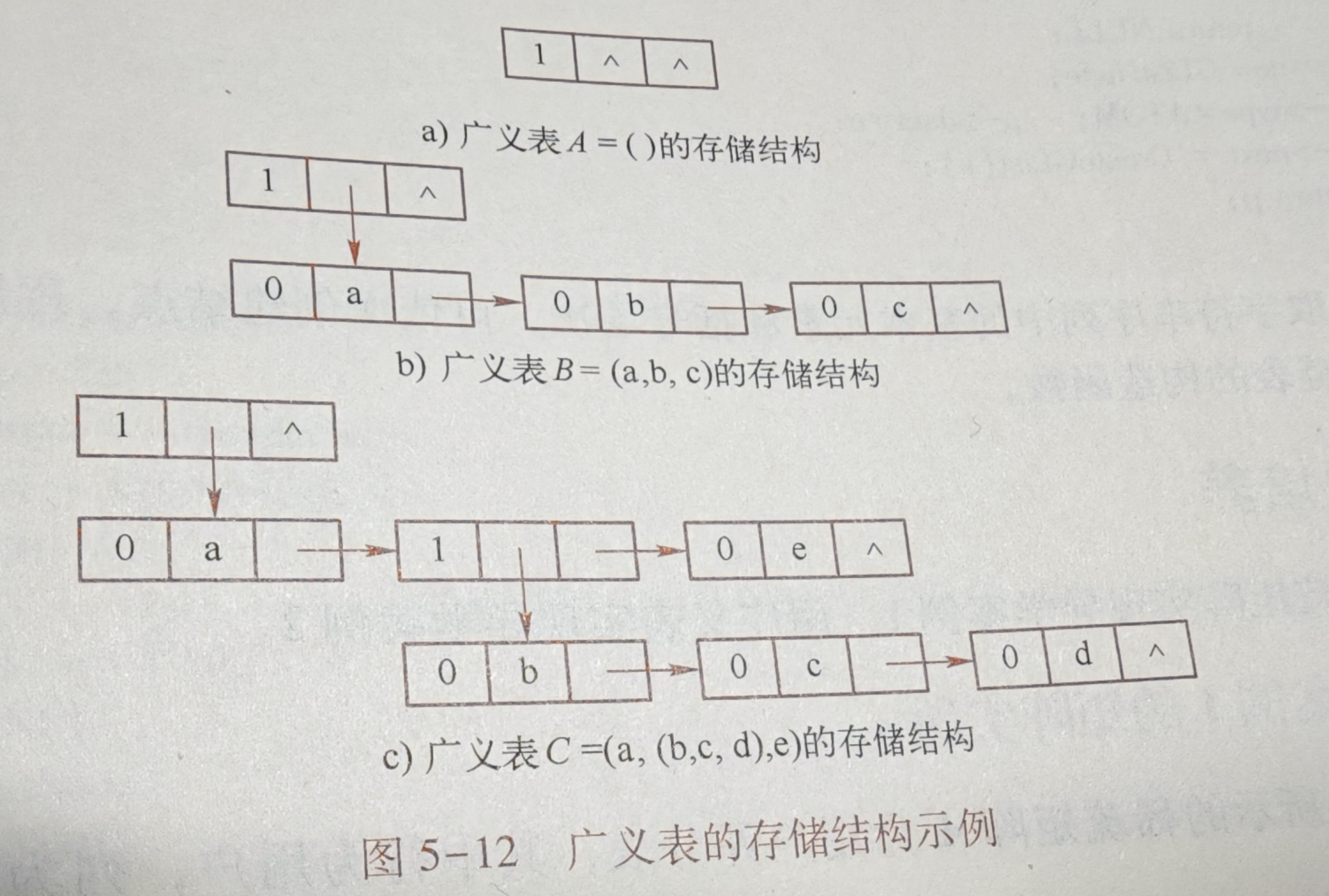
- A = ()
- B = (a, b, c)c)`
- C = (a, (b, c, d), e)
- D = (a, b, (e, f, g))
- E = ((a, b), c, (d, e, (f, g)))
- F = ((), ((), ()))
下表展示了图片中的几个广义表的长度、深度、表头和表尾的具体值:
| 广义表 |
长度 |
深度 |
表头 |
表尾 |
| A |
0 |
1 |
空 |
() |
| B |
3 |
1 |
a |
(b, c) |
| C |
3 |
2 |
a |
((b, c, d), e) |
| D |
3 |
3 |
a |
(b, (e, f, g)) |
| E |
4 |
3 |
(a, b) |
(c, (d, e, (f, g))) |
| F |
3 |
3 |
() |
((), ((), ())) |
广义表的存储结构
 IMG_20241021_153619
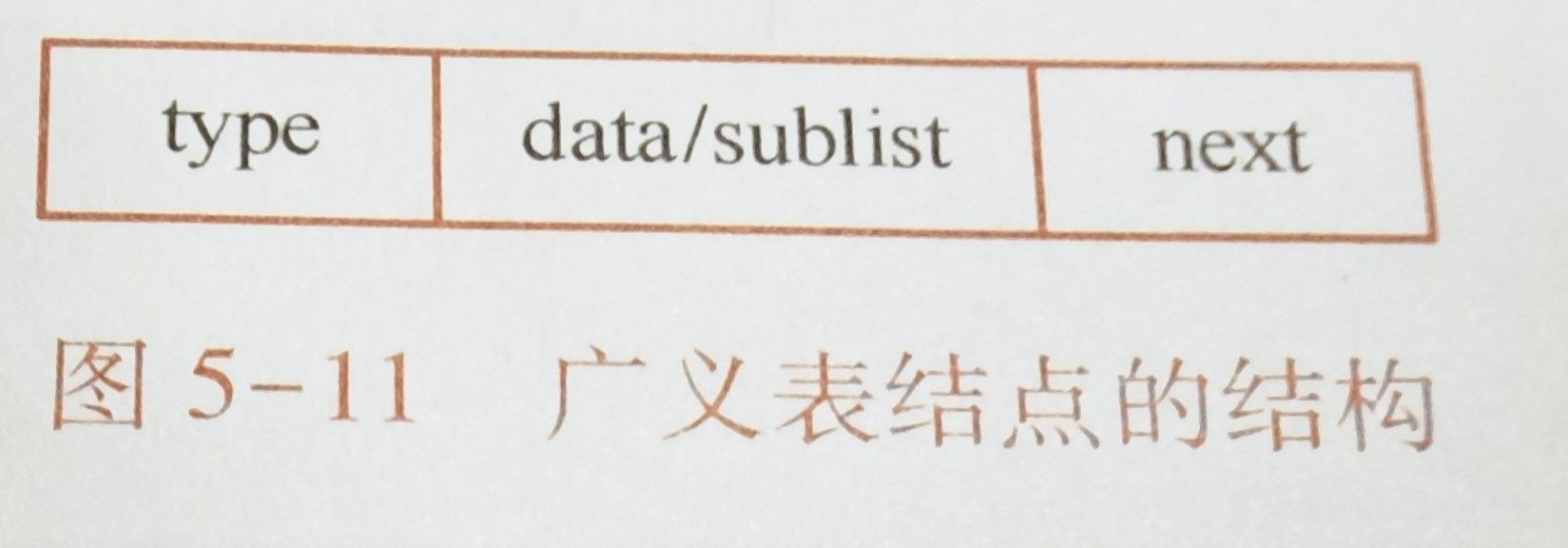
由于广义表中的每个元素可能是原子或子表,因此在广义表的存储结构中存在两类结点:
- 原子节点:用于存储单个元素。
- 子表节点:用于存储子表的指针。
为了区分元素是原子还是子表,结构中还设置了一个标识域
type
1
| enum GListNodeType { ATOM, LIST };
|
当type值为1,说明存入原子的值;为2,说明存入子广义表的头指针
广义表定义如下:
1
2
3
4
5
6
7
8
9
| typedef char ElemType;
typedef struct GListNode {
GListNodeType type;
union {
ElemType data;
struct GListNode *sublist;
};
struct GListNode *next;
} GListNode, *GList;
|
 IMG_20241021_154058
代码
求广义表长度
1
2
3
4
5
6
7
8
9
10
|
int LengthGList(GList list) {
int length = 0;
GList current = list;
while (current != NULL) {
length++;
current = current->next;
}
return length;
}
|
求广义表深度
1
2
3
4
5
6
7
8
9
10
11
12
13
14
15
16
17
18
|
int DepthGList(GList list) {
if (list == NULL) {
return 1;
}
int maxDepth = 1;
GList current = list;
while (current != NULL) {
if (current->type == LIST) {
int sublistDepth = DepthGList(current->value.sublist) + 1;
if (sublistDepth > maxDepth) {
maxDepth = sublistDepth;
}
}
current = current->next;
}
return maxDepth;
}
|
打印
1
2
3
4
5
6
7
8
9
10
11
12
13
14
15
16
17
18
19
20
21
|
void PrintGList(GList list) {
if (list == NULL) {
printf("()");
return;
}
printf("(");
GList current = list;
while (current != NULL) {
if (current->type == ATOM) {
printf("%c", current->value.data);
} else if (current->type == LIST) {
PrintGList(current->value.sublist);
}
if (current->next != NULL) {
printf(", ");
}
current = current->next;
}
printf(")");
}
|
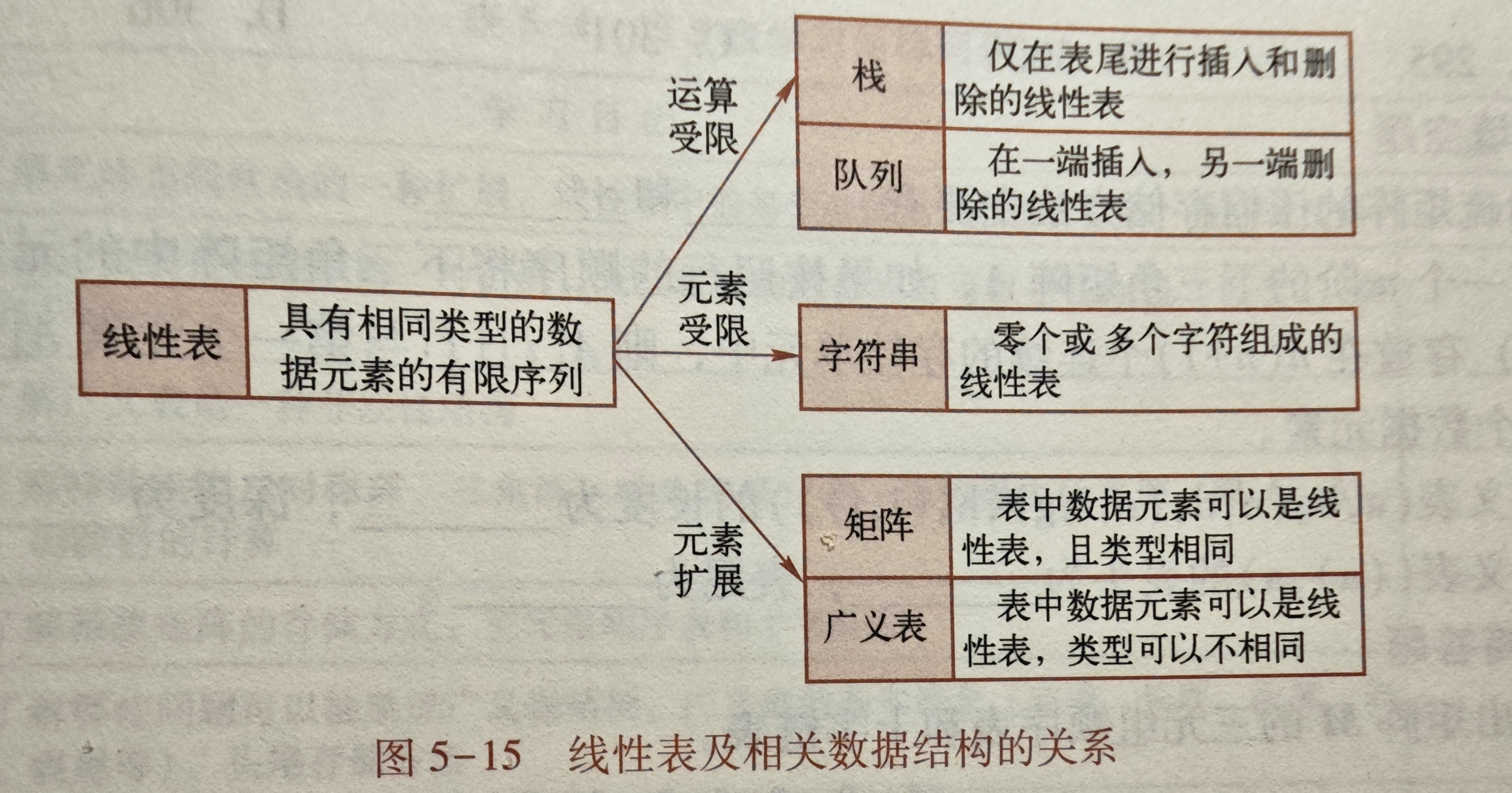
线性表章节小结
 IMG_20241021_155320