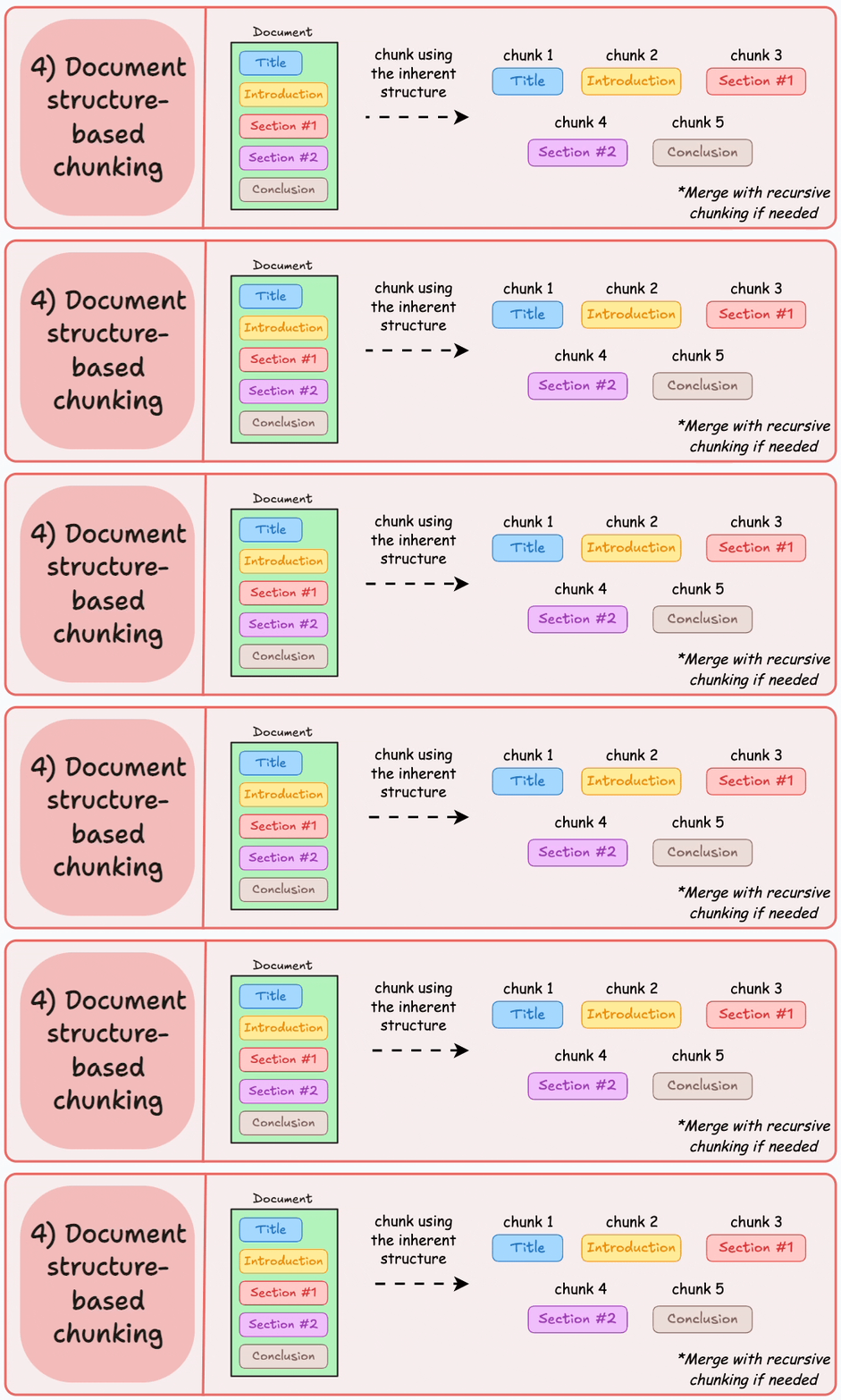
[Document(metadata={'Header 1': 'Foo', 'Header 2': 'Bar'}, page_content='Hi this is Jim  \nHi this is Joe'),
 Document(metadata={'Header 1': 'Foo', 'Header 2': 'Bar', 'Header 3': 'Boo'}, page_content='Hi this is Lance'),
 Document(metadata={'Header 1': 'Foo', 'Header 2': 'Baz'}, page_content='Hi this is Molly')]
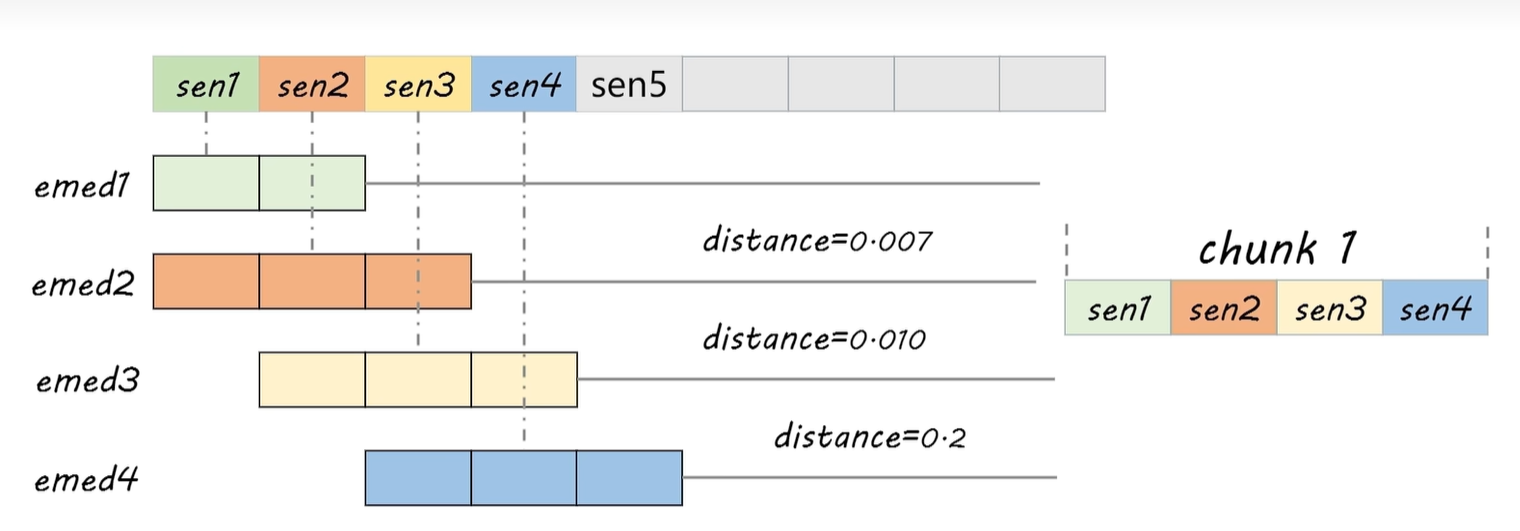
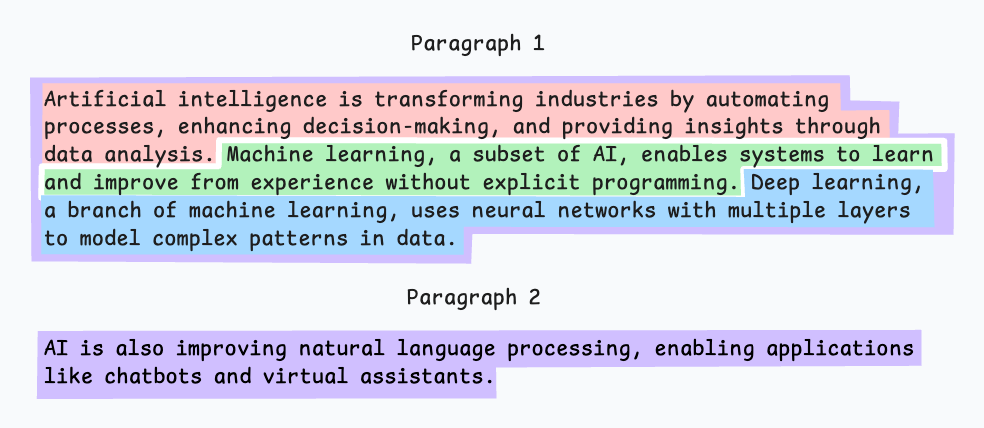
''' 将文本划分成单句,可以按照标点符号划分 ''' single_sentences_list = re.split(r'(?<=[。!?])', essay) # 移除可能存在的空字符串 single_sentences_list = [s.strip() for s in single_sentences_list if s.strip()]
''' 我们需要为单个句子拼接更多的句子,但是 `list` 添加比较困难。因此将其转换为字典列(`List[dict]`) { 'sentence' : XXX , 'index' : 0} ''' sentences = [{'sentence': x, 'index' : i} for i, x inenumerate(single_sentences_list)]
#利用滑动窗口分段 defcombine_sentences(sentences, buffer_size=1): combined_sentences = [ ' '.join(sentences[j]['sentence'] for j inrange(max(i - buffer_size, 0), min(i + buffer_size + 1, len(sentences)))) for i inrange(len(sentences)) ] # 更新原始字典列表,添加组合后的句子 for i, combined_sentence inenumerate(combined_sentences): sentences[i]['combined_sentence'] = combined_sentence
#根据阈值划分 breakpoint_percentile_threshold = 95 breakpoint_distance_threshold = np.percentile(distances, breakpoint_percentile_threshold) print("距离的第95个百分位阈值是:", breakpoint_distance_threshold) # 找到所有距离大于阈值的点的索引,这些索引就是我们的切分点 indices_above_thresh = [i for i, x inenumerate(distances) if x > breakpoint_distance_threshold]
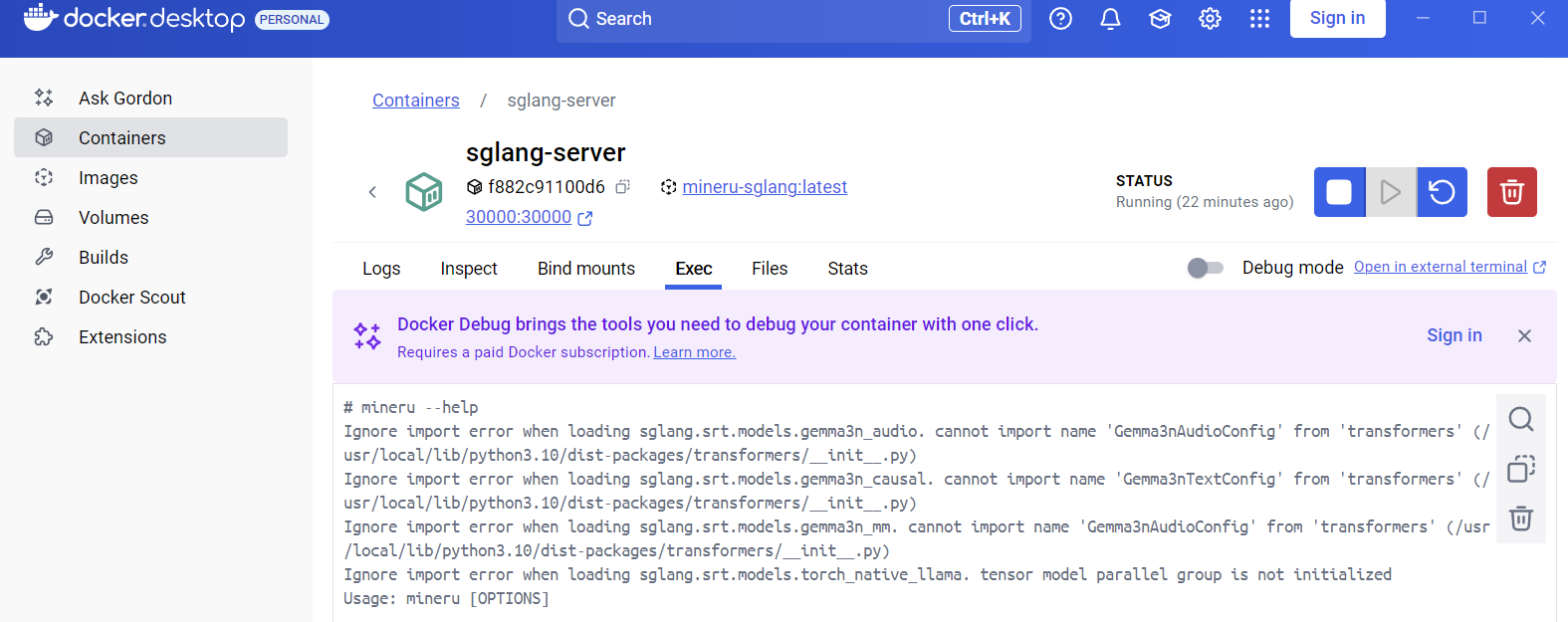
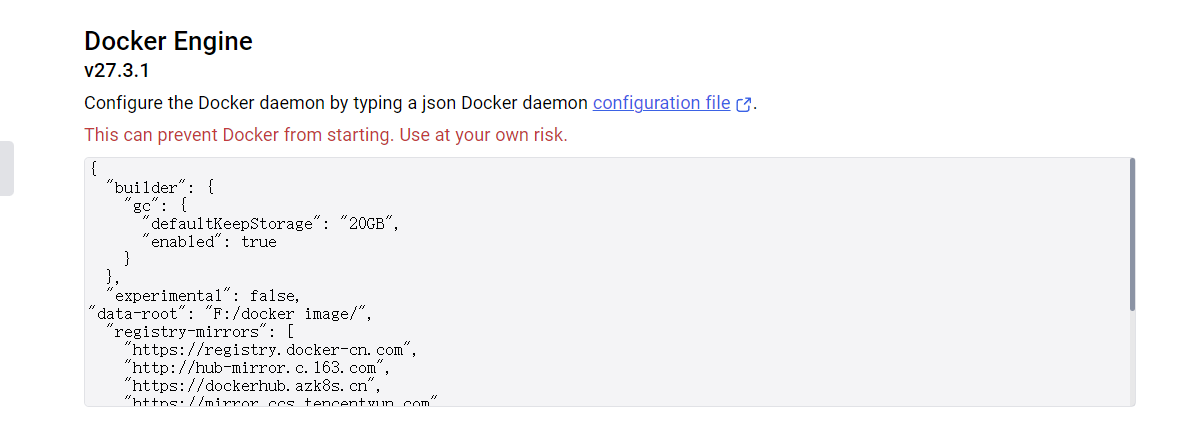
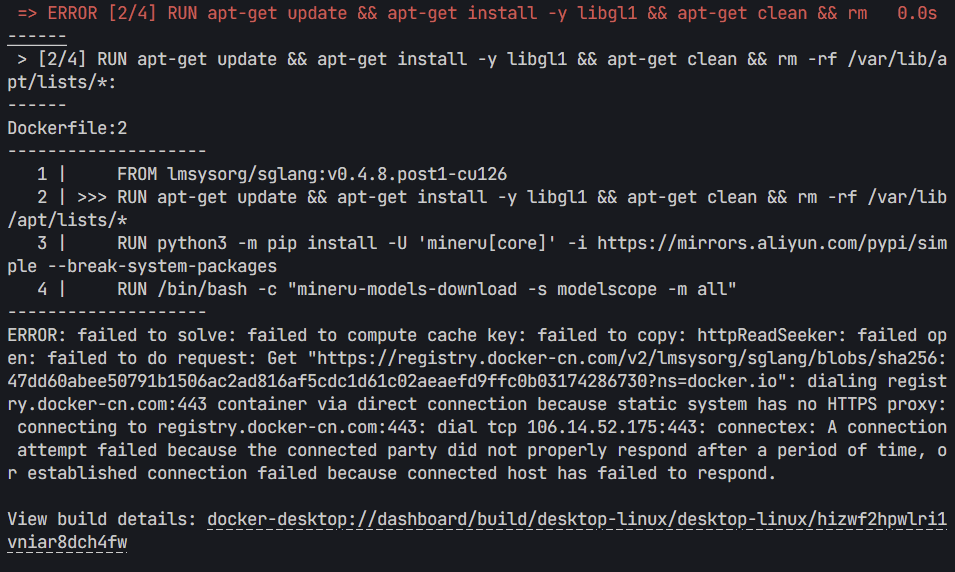
lmsysorg/sglang:v0.4.8.post1-cu126: failed to resolve source metadata for docker.io/lmsysorg/sglang:v0.4.8.post1-cu126: unexpected status from HEAD request to https://yaj2teeh.mirror.aliyuncs.com/v2/lmsysorg/sglang/manifests/v0.4.8.post1-cu126?ns=docker.io: 403 Forbidden
deffindMinCoins(coins, amount): coins.sort(reverse=True) # 降序排序 res = [] for i inrange(len(coins)): while amount >= coins[i]: res.append(coins[i]) amount -= coins[i] return res
defprim(graph, start=0): V = len(graph) # 顶点数量 selected = [False] * V # 标记顶点是否已加入生成树 key = [sys.maxsize] * V # 记录各顶点到生成树的最小权重 parent = [-1] * V # 记录最小生成树的父节点
key[start] = 0# 起始顶点的权值设为0
for _ inrange(V): # 找到当前未选顶点中 key 最小的顶点 u min_key = sys.maxsize u = -1 for v inrange(V): ifnot selected[v] and key[v] < min_key: min_key = key[v] u = v if u == -1: break# 无连通顶点,生成树结束 selected[u] = True# 将 u 加入生成树
# 更新 u 的所有邻接顶点的 key 值 for v inrange(V): if graph[u][v] > 0andnot selected[v] and graph[u][v] < key[v]: key[v] = graph[u][v] parent[v] = u # 记录 v 的父节点为 u
def unbounded_knapsack_2d(weights, values, capacity): n = len(weights) dp = [[0] * (capacity + 1) for _ in range(n + 1)]
for i in range(1, n + 1): for j in range(1, capacity + 1): if weights[i-1] <= j: dp[i][j] = max( dp[i-1][j], dp[i][j - weights[i-1]] + values[i-1] ) else: dp[i][j] = dp[i-1][j] return dp[n][capacity]
def optimal_bst(p, q, n): # 初始化 dp 和 w 数组(大小为 (n+2) x (n+2),避免越界) dp = [[0] * (n+2) for _ in range(n+2)] w = [[0] * (n+2) for _ in range(n+2)] root = [[0] * (n+2) for _ in range(n+2)]
# 初始化虚拟键的权重 for i in range(n+1): w[i][i] = q[i] # 填表顺序:链长从 1 到 n for l in range(1, n+1): # l 为关键字数量 for i in range(n - l + 1): j = i + l w[i][j] = w[i][j-1] + p[j] + q[j] dp[i][j] = float('inf') # 枚举根节点 r(i < r ≤ j) for r in range(i+1, j+1): cost = dp[i][r-1] + dp[r][j] if cost < dp[i][j]: dp[i][j] = cost root[i][j] = r return dp[0][n], root
'''
https://leetcode.cn/problems/n-queens/
'''
n=4
ans=[]
path=[]
onpath=[False]*n#记录哪一列有皇后
diag1=[False]*(2*n-1)#记录主对角线是否有皇后
diag2=[False]*(2*n-1)#记录副对角线是否有皇后
def dfs(row,path:list):
    if row==n:
        #print(path)
        chess=[]
        # 生成棋盘
        for i in range(n):
            chess.append("."*path[i]+"Q"+"."*(n-path[i]-1))
        ans.append(chess)
        return
    for col in range(n):
        if isvalid(row,col):
            path.append(col)#放置皇后
            onpath[col]=diag1[row+col]=diag2[row-col+n-1]=True
            dfs(row+1,path)#递归下一行
            path.pop()#回溯,取消放置
            onpath[col]=diag1[row+col]=diag2[row-col+n-1]=False

def isvalid(row,col):
    if onpath[col] or diag1[row+col] or diag2[row-col+n-1]:
        return False
    return True
dfs(0,path)
print(ans)